Shasta
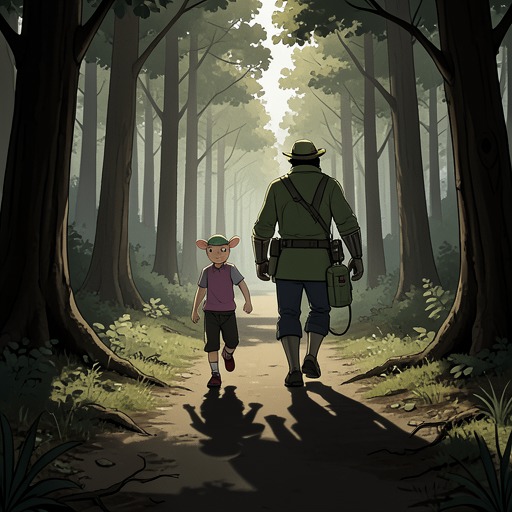
The Horse and His BoyShasta begins as a boy called Arsheesh’s son, living in a cottage on a small sea creek in southern Calormen. The fisherman’s household depends on Shasta’s labor: he mends and washes nets, cooks supper, cleans the cottage, and faces fault-finding or punishment when Arsheesh is displeased. Shasta has little reason to love the man he calls Father, and is troubled by that inability until he learns that he is not Arsheesh’s child. His uncertain birth, first a source of unease, becomes the opening to a new identity and a life beyond the household that has confined him.
Identity and Early Life
The world Shasta knows is bounded by the cottage, the village to the south, and a ridge to the north. He finds the village dull, but looks eagerly toward the unvisited country beyond the hill. When he asks Arsheesh what lies there, the fisherman either rebukes him or answers with a proverb against idle questions. The contrast establishes Shasta’s curiosity against the narrow routine imposed on him: his attention turns toward a horizon that his daily work does not permit him to cross.
That desire for elsewhere becomes urgent when Shasta overhears Arsheesh bargaining with a Tarkaan over his sale. The prospect does not strike him as an entirely new kind of hardship, since his existing life has already offered little freedom. More important, he is relieved to learn that the fisherman is apparently no relation to him. He imagines a range of possible origins, from the family of a Tarkaan to that of the Tisroc or even a god. At this point, Shasta does not know who he is; he knows only that the old explanation of his life has fallen away.
Escape and Companionship
The horse belonging to the Tarkaan gives Shasta the means to escape. The horse reveals that he is Bree, a talking horse from Narnia, stolen as a foal after he wandered beyond the southern slopes. For years Bree has concealed his speech and intelligence to avoid being displayed and guarded more closely. His captivity and Shasta’s threatened sale bring the boy and horse together as fellow escapees, though Bree’s knowledge and confidence initially place him in the guiding role.
Their flight is not simply a matter of reaching safety: they must make practical decisions while traveling through enemy country. When Shasta wonders whether using money is theft, Bree considers the moral question and concludes that captives in enemy territory may take the money as spoil, particularly because Shasta needs food and cannot live on grass and oats. The exchange shows Shasta’s concern with right conduct even under pressure, while their dependence on one another turns escape into a shared undertaking.
In Tashbaan, Shasta is mistaken for Prince Corin, and the confusion briefly gives him access to the prince’s room. When Corin asks who he is, Shasta explains that he believes himself Narnian or at least Northern by origin, though he has been brought up in Calormen; he is fleeing across the desert with Bree. Corin supplies a route out through the window, across a verandah roof and a wall, and down onto a rubbish heap. The encounter ends not in rivalry over their resemblance but in an immediate friendship, and Corin’s directions help Shasta resume the escape.
Courage, Responsibility, and Companions
Shasta’s own account of the journey, later told to a mysterious voice, gathers its dangers into one continuous ordeal: flight from Calormen, pursuit, escape through Tashbaan, a night among the tombs, the desert’s heat and thirst, and the delay caused when Aravis is wounded. By then he is exhausted and hungry, and understands his journey chiefly as a sequence of misfortunes. The account’s limited perspective matters: Shasta can describe what happened to him, but cannot yet see how its separate episodes connect.
Bree’s response to danger exposes a sharp contrast between the horse’s self-image and Shasta’s conduct. After the lion encounter, Bree decides that he should return to Calormen because he considers himself fit only for slavery: he believes he abandoned Hwin, Aravis, and Shasta to save himself. He is especially ashamed that Shasta turned back while he ran away, despite Shasta’s lack of experience and training. Bree’s judgment makes the boy’s courage visible through another character’s remorse; Shasta’s value is not a matter of rank or preparation, but of the direction in which he runs when his companions are in danger.
Aslan’s Revelation
When Shasta tells the voice about his unknown parents, his upbringing by Arsheesh, and the dangers of the crossing, he asks whether meeting so many lions was bad luck. The voice answers that there was only one lion. It identifies itself as the lion that brought Shasta together with Aravis, comforted him among the tombs, drove away jackals while he slept, gave the horses strength to reach King Lune in time, and pushed the boat carrying Shasta as an infant toward the shore where Arsheesh found him. The revelation transforms a chain of frightening, seemingly disconnected encounters into a pattern of guidance, extending from Shasta’s earliest survival to the urgent end of the journey.
Shasta also asks whether this same lion wounded Aravis. The answer is yes, but the lion refuses to explain her story to Shasta: it says that it is telling him his own story, not hers, and tells no one another person’s story. The distinction sets a boundary around Shasta’s understanding. He can learn how events shaped his own path without being given another character’s private account as an explanation for them.
The lion’s later conversation with Aravis clarifies the consequence of that earlier encounter: her wounds corresponded to the stripes inflicted on her stepmother’s enslaved attendant after Aravis drugged the woman so she could escape. The punishment makes Aravis understand the suffering her action caused. For Shasta, the revelation belongs to the larger lesson that the dangers on the road were not all interchangeable misfortunes; they carried different meanings and responsibilities for the people who met them.
Narrative Significance
Shasta’s arc moves from imposed servitude and uncertainty toward chosen action and a broader understanding of his place in events. His background makes freedom concrete: at home he performs a household’s necessary work under the threat of punishment, and the prospect of being sold appears to him as a change of master rather than a wholly unfamiliar condition. Escape with Bree gives him the chance to act, while his response to danger distinguishes him from the experienced horse who initially boasts of his past and then flees.
The story also makes Shasta’s limited knowledge part of its design. He begins by wondering what lies beyond the northern ridge and by imagining possible parents; later, he travels without knowing why the same lion keeps appearing at crucial points. Aslan’s revelation does not erase the hardship Shasta has described. Instead, it changes their arrangement in retrospect: what seemed like accidents becomes guidance, while the instruction to hear only one’s own story preserves the difference between Shasta’s understanding and the lives of his companions.